
Year in Reading, Part I
from friends and supporters of book(ish)

I’m glad to present the third annual book(ish) Year in Reading series, which will run in two parts this year. When I sent out the call, I asked friends, supporters of the newsletter, and literary pals (i.e. people whose work I respect and admire) if they would be willing to write about their year in reading. The prompt was simple: organize it however you want, and give it a personal touch if you’re so inclined, 200-ish words. The great media monoliths can have their bests and editors’ picks and top tens. The lists are fun to browse, yes, I agree, but they are not gospel. There is a much, much wider world out there beyond the popular consensus of what was published in 2025. As Kate Zambreno says, “There is nothing objective about the experience of confronting and engaging with and swooning over literature,” and the book(ish) Year in Reading doesn’t pretend to be objective. Personal tastes, diversions, whims, obsessions, idiosyncratic interests—they’re all here, which feels like a small antidote to the algorithmic. I could go on, but you’ve likely been thinking about this stuff too. Without further ado, please enjoy these Year in Reading entries. (Due to the length of this newsletter, you may have to open this in a browser or in the Substack app to see the full message. I hope you do!) Happy New Year - Josh
I escaped into a lot of Mick Herron this year. I like Slow Horses as a TV show, but I like the novels even more. The protagonist (antagonist?) Jackson Lamb, is a deep, rich, straight-forward and elusive character. The series is both candy and meat. It’s literary right when it needs to be. Herron’s cynical affection for London gets me every time.
In poetry, I was blown away by Yalie Saweda Kamara’s Besaydoo. She writes beautifully about home and what she envisions for America. Her words and ideas moved me in my body and in my work. I was also deeply affected by the spirit of Padraig Ó’Tuama’s Kitchen Hymns. And, although I got there late, I went nuts over Wendy Xu’s Phrasis.
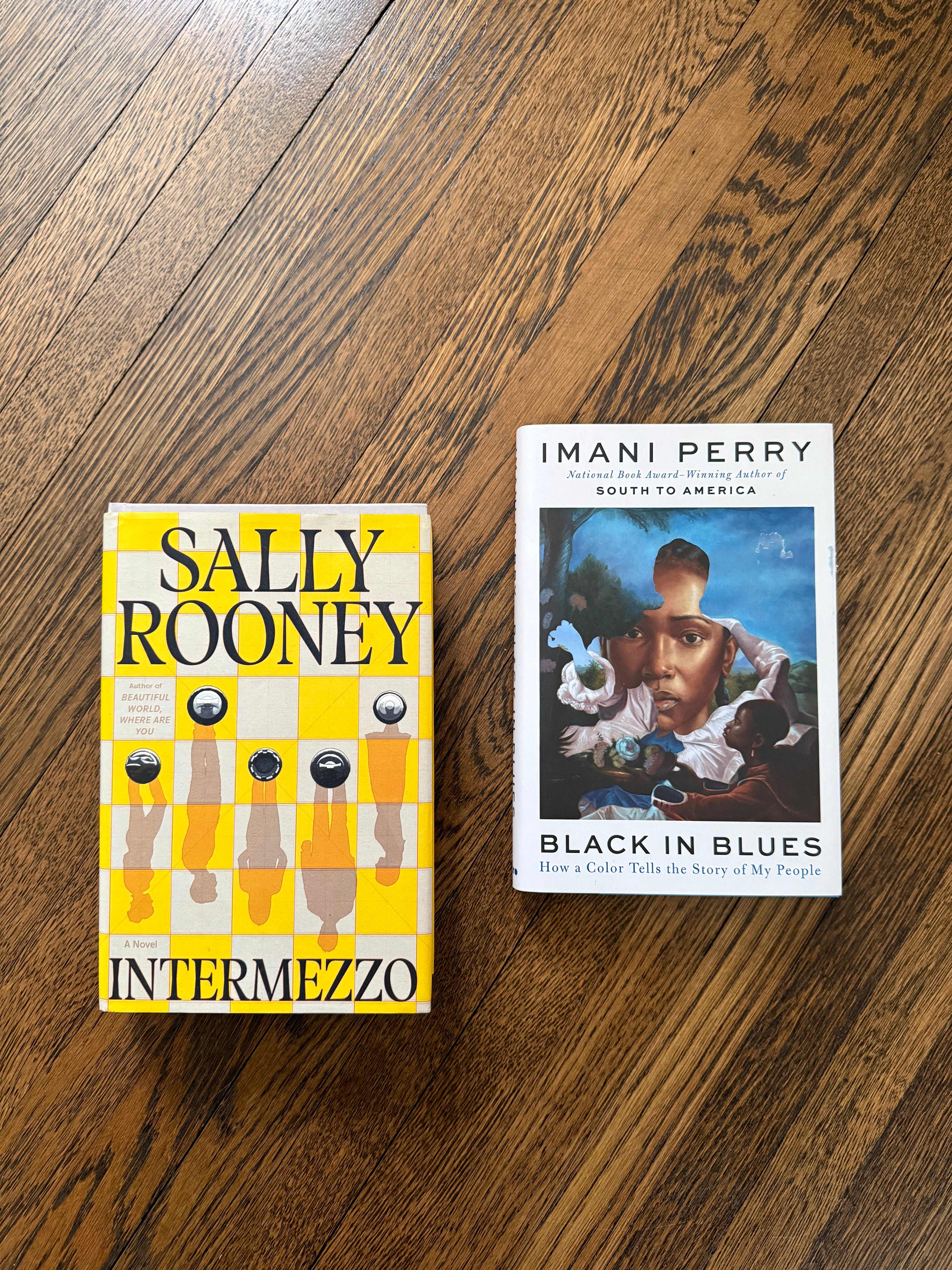
I loved Intermezzo by Sally Rooney. I was blown away by Black in Blues: How a Color Tells the Story of My People by Imani Perry (who is productive on a level that makes no sense to me). And, my favorite book this year was Minor Black Figures by Brandon Taylor. This feels like cheating a bit. It’s about a young, Black, male artist in New York wrestling with big questions about art and life. Our daughter is an artist in New York, fresh out of school, getting established. I also love New York and big questions about art and life. Taylor is so smart and so in tune with the zeitgeist. He’s also both academic and not. This book felt made for me (and our kiddo), a perfect gift at the perfect time.
—Michael Kleber-Diggs, poet/memoirist (Minneapolis, MN)
My knee-jerk is to sound cool. Which automatically makes it uncool. Like Cameron Crowe naming his memoir The Uncool but in reverse. A “If you label it this then it can’t be that” kinda thing. Perfection, the succinct millennial manifesto, will thus go unmentioned.
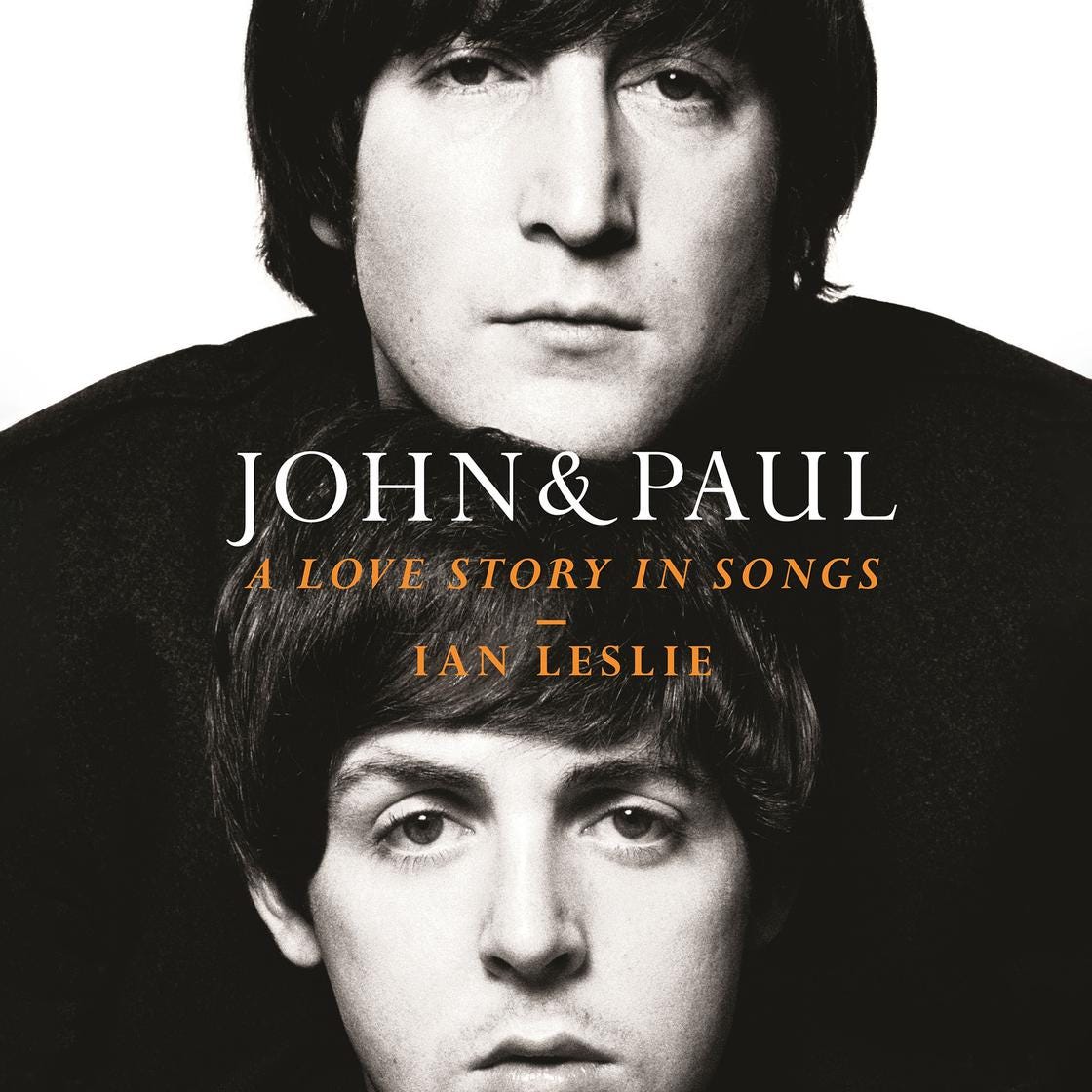
If I had to pick one book from 2025 to give to my daughter, though, that’s easy: Ian Leslie’s John & Paul: A Love Story in Songs. And get this: I LISTENED TO IT! I’ve picked an AUDIOBOOK!! About the BEATLES!! Does it get any uncooler?!? Which obviously makes it the coolest choice, but now we’ve reached the ouroboros phase of the literary WilcoDad.
In our hour of darkness, this book saved me. For fifteen hours or so. Neighbors saw me openly weep. It literally brought me to my knees. I shit you not, I fell to my knees, overwhelmed with—get this!—gratitude! It made me believe in something bigger, made me feel so damn lucky to have been born in a time, on a continuum, where Paul McCartney and John Lennon met.
I’m as big a Beatles guy as the next guy. Not obsessive, but I marvel. I marvel quite a bit. It’s the fucking Beatles. Until this book, my forcibly simplistic understanding of them was: Paul wrote his proud, jaunty numbers, John wrote his insecure, saltier ones, they made each other better, musically, yadayadayada, Yoko sucks, “Good Day Sunshine,” “And Your Bird Can Sing.” The songs themselves need each other to be what they are. What I lost sight of, or perhaps never saw, was that John and Paul needed each other to become who they’d be. What I never fully grasped was that they were in love.
Not necessarily like that, but also not necessarily NOT like that! This book isn’t concerned with charts and hits and spats and publishing rights; this book is about the love. Listening to it found me on my knees, slapping the mud crying “of COURSE they were in love, you IDIOT!!! OF COURSE THEY WERE!! And you get to be PART OF IT, you INGRATE! Let not the bummers blind you, you crummy steak!”
The chaos of the dark is endemic. Like Phosphorescent sang last year:
Now how can I get it right?
I don’t even like what I write
I don’t even like what I like anymore…
In a time where it can feel like a curse, Ian Leslie’s book made me feel lucky to be alive. And in a cultural climate which, more often than not, treats it with contempt, John & Paul reminded me that love is so, so awesome.
— Colin Thompson, writer/director (New Rochelle, NY)
Out of the 84 books I read this past year (no brag), only 15 are ones I’d recommend (see? A lot were not good). Most were fiction, with the exception of one poetry collection and one essay collection. One standalone short story, and one collection. Some have been out for a few years, and some came out this year. I can’t say there was really a theme to sum it all up. I had a lot of disappointments this year, and it’s prompted me to re-examine how I choose what to read in 2026. With barely a 17% success rate for 2025, I’m looking to cast off the methods of old and go the old-fashioned way—with my heart. Without tracking on an app. Without making long TBRs of what hot new books publishers are pushing. I want to mine my own shelves, re-read some old favorites, match a book to the weather. Write a review only for me, with paper and pen, to help me synthesize what I’ve read. In short, I want to slow it down. When I think about it, that may actually be the theme tying these 15 books together—they were all books that made me slow down. I read them steadily, carefully, marveling over sentences, folding the covers closed for a moment while I looked far off, letting the words sink in. I want to follow that feeling in 2026. Maybe that will mean only reading 15 books the entire year. But if they all make me feel the way these 15 did, it will have been a banger of a year.
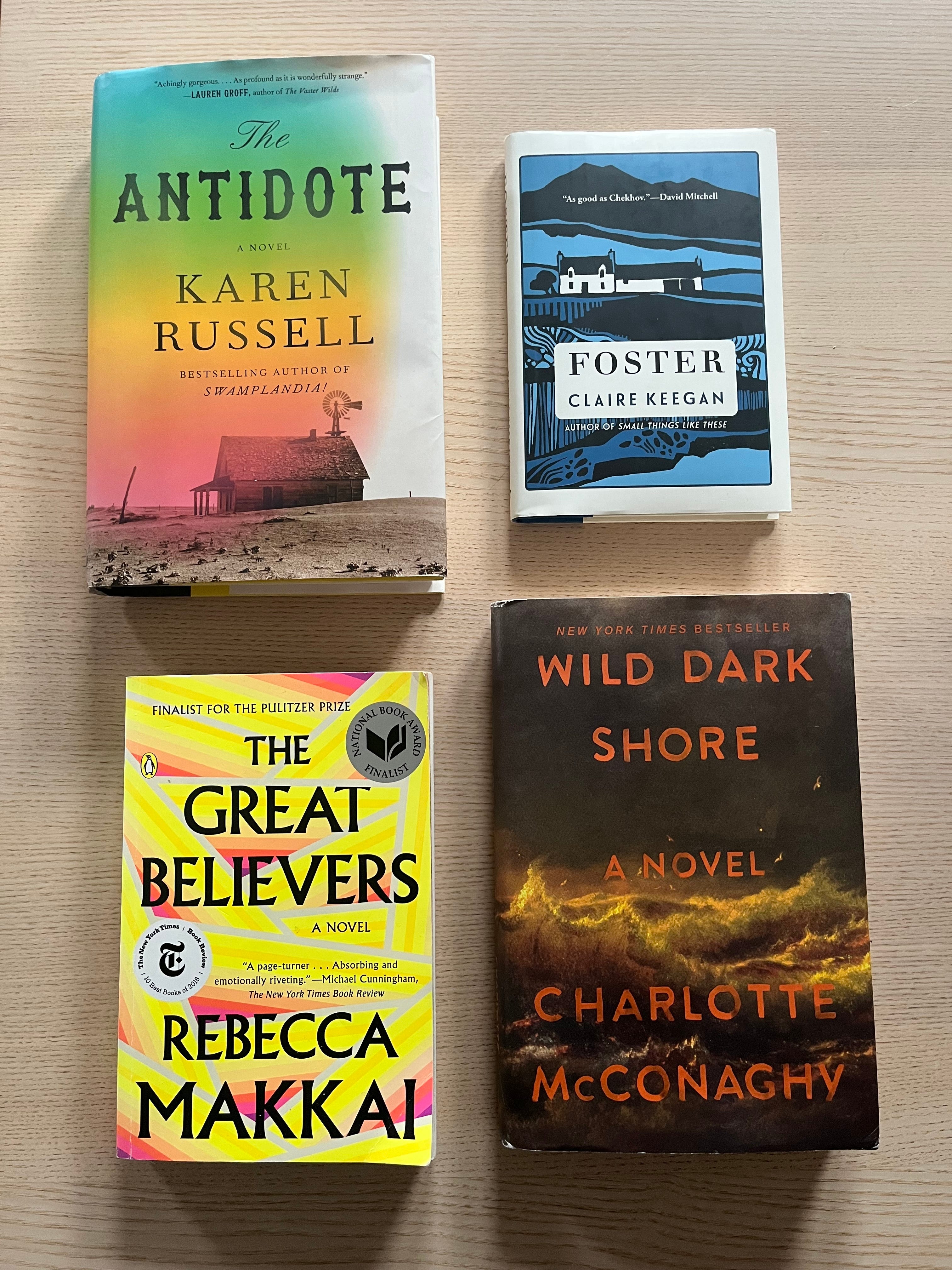
My unequivocal recommendations are: The Great Believers (Rebecca Makkai), Scaffolding (Lauren Elkin), Margo’s Got Money Troubles (Rufi Thorpe), Long Island Compromise (Taffy Brodesser-Akner), Bluff (Danez Smith), Nightbitch (Rachel Yoder), Ghostroots (’Pemi Aguda), Wild Dark Shore (Charlotte McConaghy), Perfection (Vincenzo Latronico), No Straight Road Takes You There (Rebecca Solnit), The Antidote (Karen Russell), Open, Heaven (Seán Hewitt), The Safekeep (Yael Van der Wouden), Heart the Lover (Lily King), Foster (Claire Keegan).
—Lindsey Wright, author of Currents (Minneapolis, MN)
How are we Americans, individually and together, being shaped at present? What of our nature, what of time, of friendships and relations, is producing us into another year of life? Some of what I read in 2025 that still echoes for me are explorations of the soul’s life in a pressing environment.
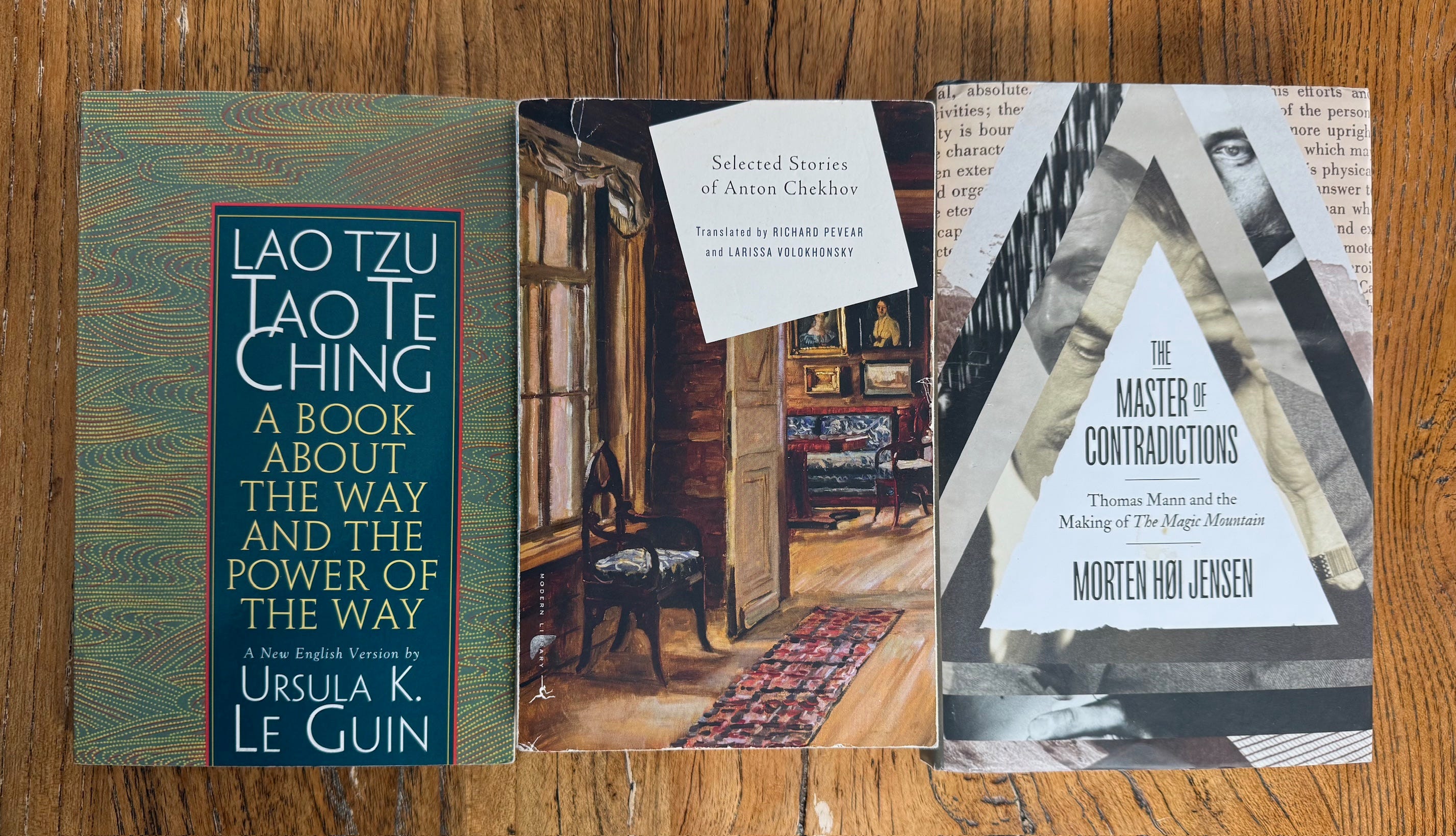
I found great pleasure in Ursula Le Guin’s English rendition of the Tao Te Ching. What’s there to say? An ancient text on “the way and the power of the way.” Partly prose, partly verse. Le Guin loves the original text; this does not read like a side project. If you’re looking for something short that can be read one page at a time and set down in between; if you like language that is light and searching; if you have a taste for the unseen and ultimately unknowable, and see these things as necessities in times of change; if you want some humble wisdom that’ll challenge you to remain fluid and open: consider this.
Still echoing are re-reads of some cherished Anton Chekhov short stories, among them “Gooseberries,” “The House with the Mezzanine,” and “The Lady with the Little Dog.” These stories move swiftly, with characters vivid and in a kind of actual relation. And then, tucked somewhere near the end of each one comes some great personal expression, forcefully conveyed, poured out of the soul of a character or two, only for the story to fold up again and send us, the readers, back on our way. Chekhov remains ever aware of the possibilities and limits of his form. We can encounter a great heart, great wisdom, a warm spirit flush with life – yet we are also returned to a story that holds its form, grounds us in nature, human and otherwise. Something cold, often removed, muted, and wondrous. You get it all.
Lastly, I loved Morten Høi Jensen’s The Master of Contradictions: Thomas Mann and the Making of The Magic Mountain, an extraordinary work of biography, historical analysis, and literary criticism. Mann wrote his masterpiece in Europe – mostly Germany – in the years surrounding the First World War and leading towards the Second. Jensen documents how Mann, in an environment of increasing political violence, moved in a clear-headed and grounded way to embrace humane and democratic ideals. I find so much delight, comfort, and sober education in a well-written, well-researched book that situates its subject in their place and time, creating a sense of the pressures and possibilities that shaped a person and their work into being.
—Scott Melamed, writer (Minneapolis, MN)


I mark my seasons by the semester. In early spring (aka January) I was re-reading Mary Gaitskill: her 2005 novel Veronica and then her second story collection, Because They Wanted To (1997). In March I wrote a short piece about Gaitskill for the Sewanee Review blog. I blew off AWP for Storyfort (the literature-focused arm of the Treefort music festival in Boise, Idaho) and was glad to meet Kayla Jean and to buy her fiction chapbook, Cheap Seats, published by Blue Arrangements Press, co-run by Nathan Dragon and Raegan Bird, who were also in attendance. I’ve been admiring Dragon’s work in NOON for years now and was very happy to meet him and his crew, and to avail myself of a copy of his collection, The Champ Is Here, which Cash 4 Gold Books put out in 2024.
I live in Portland, Oregon but I direct a low-res MFA program at Sewanee, the University of the South, which is in the middle of Tennessee. Instead of doing two one-week residencies every year, we do one six-week mega-residency from early June to mid-July. This summer I taught a nonfiction seminar in which we read The Fire Next Time by James Baldwin, The Little Virtues by Natalia Ginzburg, Crapalachia: A Biography of a Place by Scott McClanahan, and Don’t Let Me Be Lonely by Claudia Rankine. August saw the publication of Seduction Theory by Emily Adrian and God and Sex by Jon Raymond. Both of these writers are dear friends and both of these novels are spectacular.
This fall I decamped to New York City to teach a half-semester Master Class in the Columbia MFA program. It was called Big Minimalism and we focused on short novels/novellas and flash fictions. The flash pieces are far too numerous to name but the books were The Prime of Miss Jean Brodie by Muriel Spark, That Smell by Sonallah Ibrahim (translated by Robyn Creswell), Winter in the Blood by James Welch, Mrs. Caliban by Rachel Ingalls, Lucy by Jamaica Kincaid, and Point Omega by Don DeLillo. In November, as my time in NYC was winding down, Anika Jade Levy (another dear friend; also a former student) published her debut novel, Flat Earth, which I love and cannot recommend highly enough. At the launch party for Anika’s book I met Zoe Dubno, whose own debut novel, Happiness and Love—a reimagining of Thomas Bernhard’s Woodcutters—came out in April. It was the last book I bought in NYC and the first thing I read when I got home. It’s excellent.
After all that short stuff I needed to rebalance the scales so during November and December I read the first volume of In Search of Lost Time, Lonesome Dove and David Copperfield. This was my first time with Proust and Dove, my second or third with David, which I finished this morning. I will end by mentioning that my own most recent novel, Reboot (Pantheon, 2024), will be out in paperback in January. If you’re looking for something to read, and have exhausted the options above, maybe give it a look?
—Justin Taylor, novelist/critic (Portland, OR)
Stoner by John Williams. I finished the last page of this novel laying on my living room floor. I could feel the silence of the room, filling up the empty fireplace in front of me. I heard my breath, the muffled wind outside, the hum of the fridge. I had put my pencil away and let myself fall into the life of William Stoner—how a poem draws him off the family farm and into an academic career, how power dynamics warp the department, how friendships and romance and family blossom and falter and shift over the decades of his life. Stoner struggles to find his place through Williams’ surgical descriptions of social dynamics, and yet there is a constant: poetry and literature and writers reaching through the pages, companions for life.
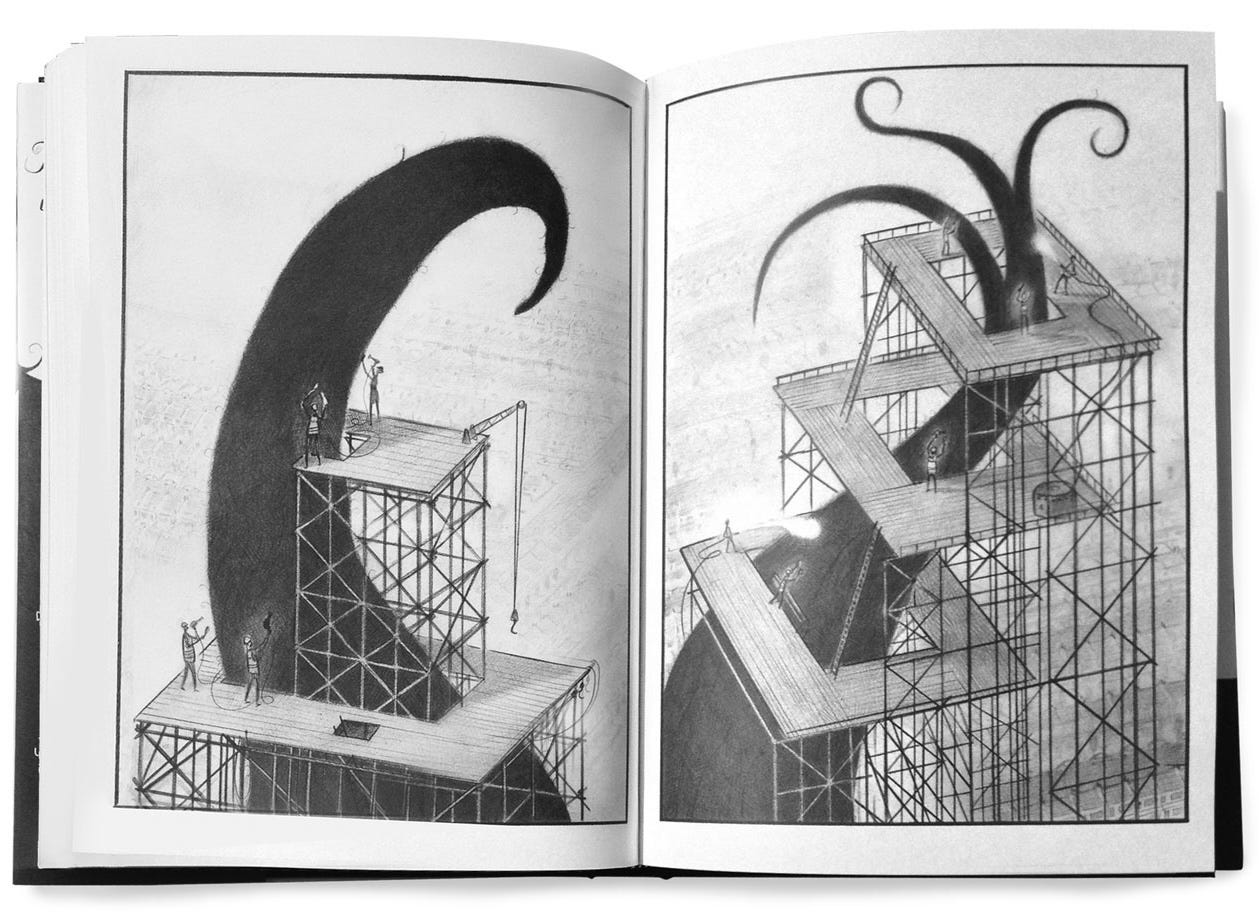
The Gigantic Beard That Was Evil by Stephen Collins. What would happen if a beard just...kept growing? For Dave, a bald everyman who passes the time staring out his window, the curls start as a nuisance. He shaves, it grows, he shaves, it grows. But then it bursts through the windows and grows larger than the house, spreading out into a public emergency. Dave lives in “Here,” a right-angle town threatened by the inky landscape of “There” beyond—how will they respond to these wild black curves? The book is wacky and existential, like Portrait of the Artist as a Young Man meets The Blob, and Collins’ melancholic undertow pull readers into a myth-sized meditation on social order, political media, and the risk of real creative work.
The Norton Anthology of English Poetry (Fifth Edition). I needed to find some grounding this year, something to moor me in a year-long existential drift toward a milestone birthday. Enter, stage right: a brick-sized textbook. It’s not the most current edition, I didn’t read it in order, and I didn’t even have a plan—just a guy flipping through tissue-thin pages guided by whatever lines caught my eye. And so many lines did: cosmic spider webs, a mind-flood, scattering dead leaves, an ancient fish, a caged songbird, a gnarly soot-covered sunflower, a temple made of words, a mountain-sized man, a mosaic made of fire, a spiritual sunrise, a caravan of ancestors, and the wind—always blowing, even now.
—Michael Wright, writer (Minneapolis, MN)
+++
Please spread the love to your local libraries, independent booksellers if you can, or shop online at Bookshop. If you’re into audio, like Colin, be sure to check out Libro.fm , an alternative to Audible, which allows you to support an independent bookstore of your choosing. I use it and love it.
See you next week for Part II of the Year in Reading series.
The review of Happiness and Love in Rain Taxi’s latest issue made me so curious about it, and it’s great to see it mentioned here! Thanks for aggregating all these voices, Josh.